Listen to article
Comments on social media, reviews, and online mentions. These are all things that can improve your brand reputation… or hurt it if they’re negative.
Since brand perception is shaped by these interactions, negative sentiment on social media can influence search behavior, buying decisions, referrals, and customer confidence.
But companies can use social media reputation management as a defense. This strategy isn’t only a “nice-to-have.” It’s fundamental for building trust and responding proactively to challenges, rather than simply cleaning up after a crisis.
Dive into this topic with us, where we’ll explore the different signals brands should monitor on social media, how to manage brand reputation, and more.
What Is Social Media Reputation Management?
Social media reputation management is the process of monitoring and influencing how people perceive your brand on social platforms. It involves tracking mentions, responding to comments and concerns, managing potential risks, and building trust through meaningful engagement.
This differs from social media management, which focuses on creating and publishing content rather than how audiences react to that content. In other words, social media reputation management helps shape the conversation around your business, not just the content you post.
Why Brand Reputation Risk Moves Faster on Social Media
Bad news travels fast, and that’s especially true on social media.
According to a recent research paper, “Anyone with Internet access can generate and consume information immediately in real time. This ability to amplify voices and encourage global debate has radically transformed the distribution of influence.” This shift means that both positive and negative brand interactions can reach large audiences almost instantly.
One poorly worded comment can go viral. One misunderstanding with a customer can quickly spark criticism and cause people to question your brand.
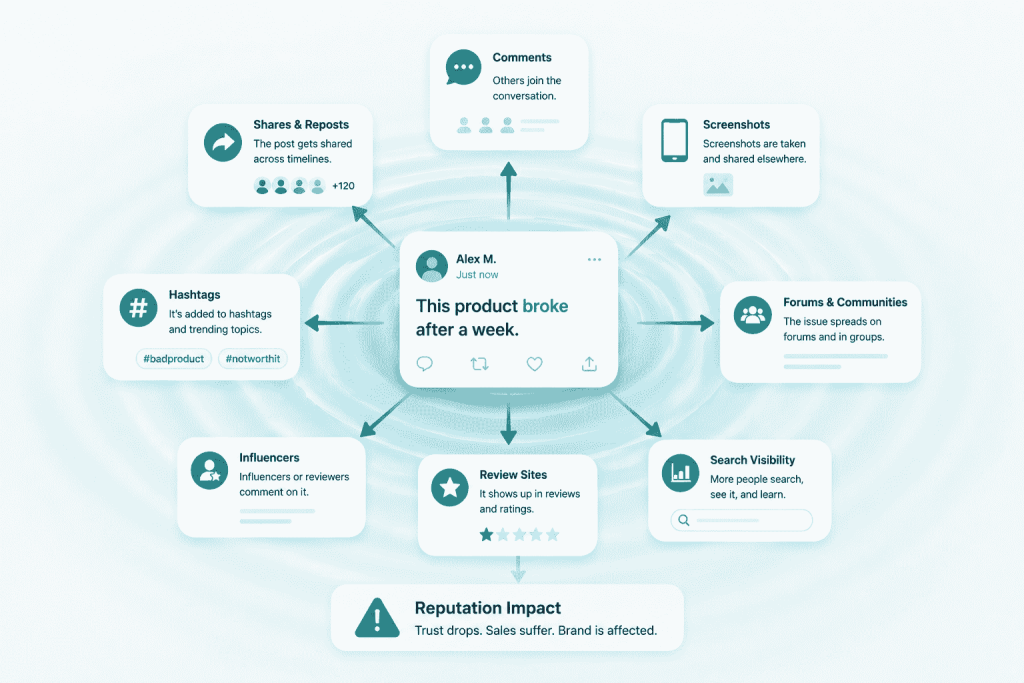
Unlike traditional word-of-mouth, social media amplifies these moments instantly, allowing negative sentiment to spread to hundreds or thousands (or even millions) of people within hours.
Public comment threads, algorithms, influencer posts, shares, and screenshots can quickly extend the reach of a single incident. Even after the original post is deleted, screenshots and reposts can keep the conversation alive, making it harder for brands to regain control of the narrative.
Social media is often where reputation issues become visible first, but the impact rarely stays there. Negative conversations can influence branded search behavior, website traffic, online reviews, email engagement, and even the effectiveness of paid advertising campaigns.
That’s exactly why many businesses incorporate reputation management into their broader 360 digital marketing services strategy to ensure a consistent brand experience across every customer touchpoint.
Reviews, Comments, and Social Signals Brands Need to Monitor
Companies need to know where their brand is being mentioned online. It’s not always as simple as checking likes and follower counts; the greatest reputation risks often show up in reviews, comment sections, forums, and other online discussions.
Reviews and Ratings
Reviews and ratings often form a customer’s first impression of your business. Whether it’s a product review, star rating, or social recommendation, people rely heavily on the experiences of others before making a decision.
Negative reviews, complaints about slow responses, or inconsistent messaging can all affect how your brand is perceived, making it important to monitor feedback and address concerns quickly.
And remember: reviews and ratings don’t just influence social media conversations. They can also shape what potential customers think when they encounter your brand in search results, making reputation management a valuable complement to SEO services.
Comments and Replies
Comment sections tell you a lot about how people feel about your brand. Pay attention to negative comments, unresolved support issues, misinformation, and the overall tone of conversations.
If the same complaints keep appearing, social media online reputation management can help address public perception, but it’s also a sign that it may be time to investigate and fix the root cause behind the feedback.
Mentions, Tags, and Social Listening Signals
Not everyone will tag your business when they talk about it online. That’s why it’s important to monitor both tagged and untagged mentions, along with product mentions, leadership mentions, branded hashtags, and campaign hashtags.
Social listening helps you understand overall sentiment, track your share of voice, and identify recurring concerns, giving you the opportunity to respond before negative conversations gain traction.
How to Manage Brand Reputation on Social Media
Social media and reputation management should go hand in hand to reduce risk. But we’re not just here to tell you it’s important; we’re also giving you practical tips you can use to strengthen your brand’s reputation online.
Create response guidelines before a problem happens.
In an ideal world, brands wouldn’t need reputation management on social media. Yet companies often find themselves dealing with reputation issues when they least expect it.
Having a plan in place before you need one helps you respond quickly and avoid making rushed decisions in the heat of the moment.
Your guidelines should cover things like response tone, how quickly your team should reply, what messages are approved, and what topics or language should be avoided altogether.
It’s also important to remember that just because a conversation isn’t public doesn’t mean it can’t become public. Direct messages can easily be screenshotted and shared online, so it’s best to treat every interaction as if it could be seen by a wider audience.
While your approach may differ between public posts and private messages, consistency and professionalism should remain the same.
Respond to negative reviews and comments with a clear process.
Building on the last point, having a clear process in place is critical. As part of that plan, you should define when conversations should be moved to a private channel, who should be involved in responding, and when an issue should be escalated. Having clear guidelines helps your team respond consistently, even when emotions are running high.
Everything should be documented so team members can follow a consistent process. It also creates a record of conversations and decisions, providing valuable context if the issue gains traction online and making it easier to follow up later.
Use social listening to catch issues early.
Track, track again, and then track some more. Social media reputation management is much more effective when you’re actively monitoring how people talk about your brand. The sooner you spot potential issues, the easier they are to address before they become bigger problems.
And don’t stop at comments on your own posts. Monitor brand and product names, leadership mentions, campaign hashtags, competitor comparisons, and industry conversations. You should also pay attention to shifts in sentiment and recurring complaints, as these can reveal reputation risks before they gain momentum.
Build proactive reputation, not only reactive damage control.
This is one of the most overlooked parts of reputation management. Many brands focus on damage control after something goes wrong, but a strong reputation gives people a fuller picture of your brand. It makes a single complaint less likely to define how you’re perceived.
You can build that reputation by sharing educational content, highlighting customer testimonials, showcasing customer success stories, answering frequently asked questions, and being transparent about your business.
Social Media Reputation Management Strategy: Step-by-Step
From audits to resolution and reporting, here’s a step-by-step strategy for managing your social media reputation.
Audit
What are people saying about your company right now?
Start by assessing your current reputation health to understand where improvements are needed. Audit all active accounts to evaluate performance across platforms, paying attention to engagement, sentiment, and recurring feedback.
Also review whether a strategy is already in place. Check what’s working, what isn’t, and how responsibilities are distributed across your team.
Monitor
Reputation management isn’t a one-time task. Social media mentions and signals must be continuously tracked and analyzed to truly understand audience perception.
The good news? This doesn’t have to be manual. Social media reputation management tools help streamline this entire process. We won’t give away too much yet, as we cover this in more detail below.
Classify
As part of monitoring, incoming comments and mentions should be categorized by sentiment: positive, neutral, or negative.
From there, classify them further based on severity and impact. For example, a private message about a minor issue should be handled differently than a public post sharing damaging images from a poor customer experience.
Both are important, but your response strategy should vary depending on urgency and potential risk.
Respond
Once classified, it’s time to respond. This could involve replying publicly to a comment or reaching out via direct message.
Your response should align with your predefined strategy, ensuring consistency in tone, messaging, and professionalism.
Escalate
Not every situation should be handled at the social media level.
Issues involving legal risks, misinformation, or potential viral escalation should be escalated according to your response matrix. This may involve looping in PR, legal, or leadership teams for guidance and approval before responding.
Clear escalation paths prevent missteps and ensure sensitive issues are handled appropriately.
Resolve
The goal isn’t just to respond; it’s to resolve the issue.
Whenever possible, move conversations to a private channel to address concerns directly and efficiently. Confirm that the user’s issue has been resolved and, if appropriate, follow up publicly to show accountability and transparency.
Resolution helps rebuild trust and demonstrates that your brand takes feedback seriously.
Report
Last but not least, track and report on your efforts toward social media and online reputation management.
Analyze key metrics such as response time, sentiment trends, resolution rates, and recurring issues. These insights help refine your strategy, identify areas for improvement, and demonstrate the impact of your efforts to stakeholders.
Social Media Reputation Management Examples
So how does this look in the real world?
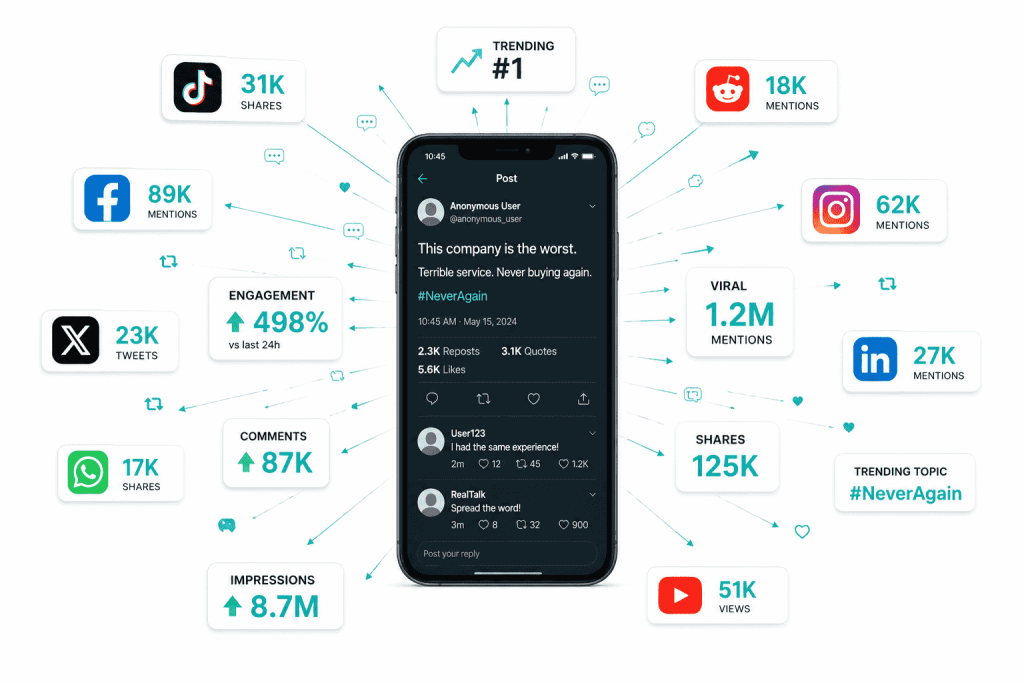
Let’s look at an example. Imagine a customer leaves a public comment on a social media post describing how bad their experience was with a company.
As shown in the image below, the comment begins to gain traction. Other users start sharing similar experiences, reacting to the post, and reposting screenshots. Within hours, what began as a single complaint has evolved into a viral conversation that threatens to damage the brand’s reputation.
The company should first acknowledge the issue publicly rather than deleting the comment or ignoring it. A response is posted thanking the customer for bringing the issue to their attention, apologizing for the negative experience, and requesting additional details through a private channel.
At the same time, their social media team alerts customer support and gathers information about the customer’s case to determine whether the complaint is legitimate and identify what went wrong.
As the conversation continues to gain visibility, the team closely monitors comments and mentions to understand audience sentiment. If misinformation begins to spread, the company provides factual updates and clarifications to ensure the discussion remains accurate.
Once the customer’s issue is resolved, the company follows up publicly to demonstrate that action was taken.
After the situation calms down, the team reviews what happened, including how quickly they responded, how the audience reacted, and whether any operational issues contributed to the complaint.
What Tools Support Social Media Reputation Management?
As social channels and customer interactions grow, the right social media management tools can become a make-or-break factor in maintaining a strong online reputation.
Businesses often use social listening tools to track brand mentions, conversations, and emerging issues across social platforms.
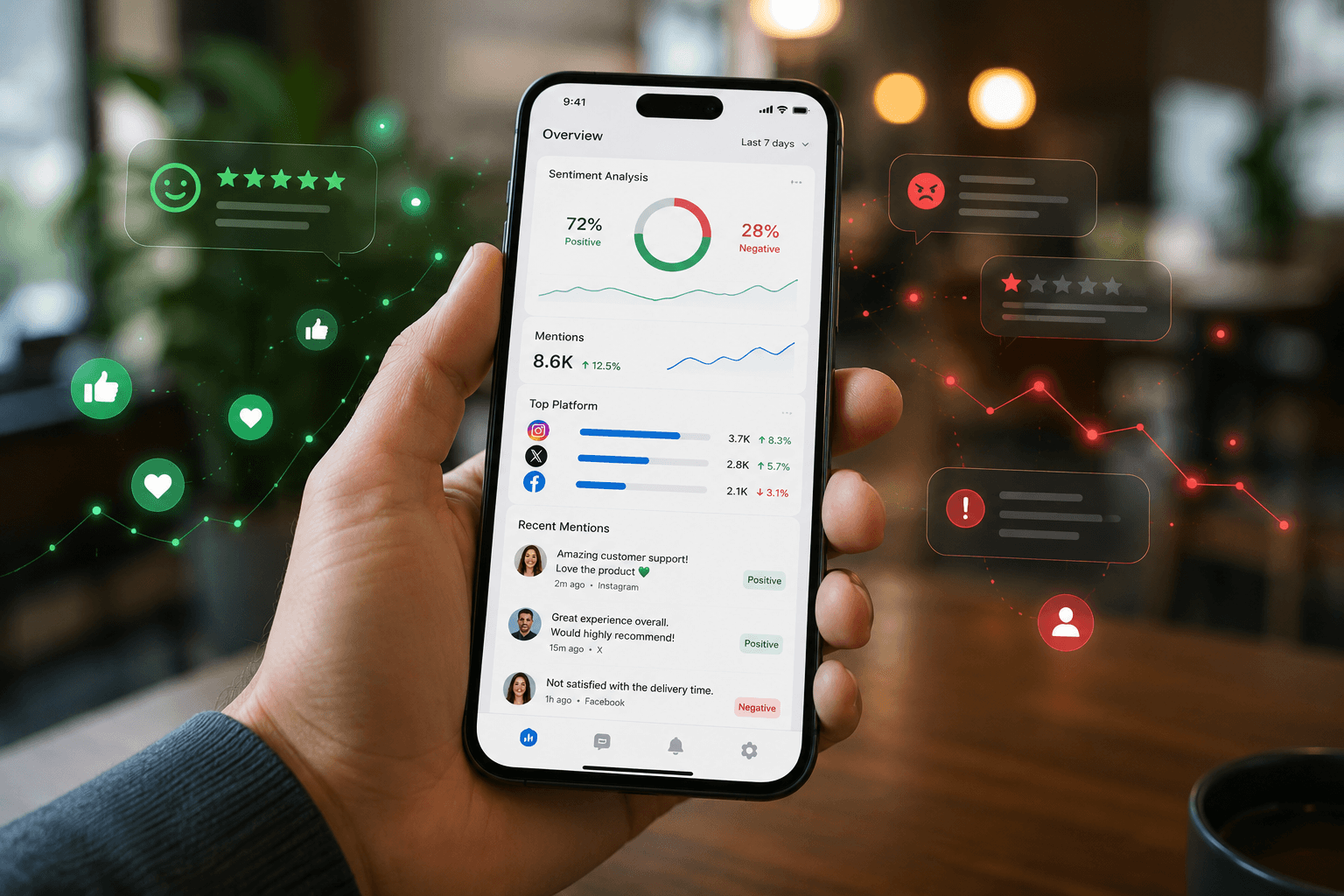
Review monitoring tools are also great for responding to feedback, managing engagement, and streamlining workflows. At the same time, sentiment analysis, alerts, and reporting dashboards help teams identify trends, measure audience perception, and spot potential reputation risks before they escalate.
These tools help businesses stay informed and proactive, but they work best when paired with clear processes and timely responses.
When to Work With a Social Media Reputation Management Company
Managing your reputation in-house isn’t always realistic, especially as your brand grows. A social media reputation management partner helps businesses monitor conversations, respond strategically, and protect their brand as their online presence expands.
Not sure whether your company could benefit from additional support?
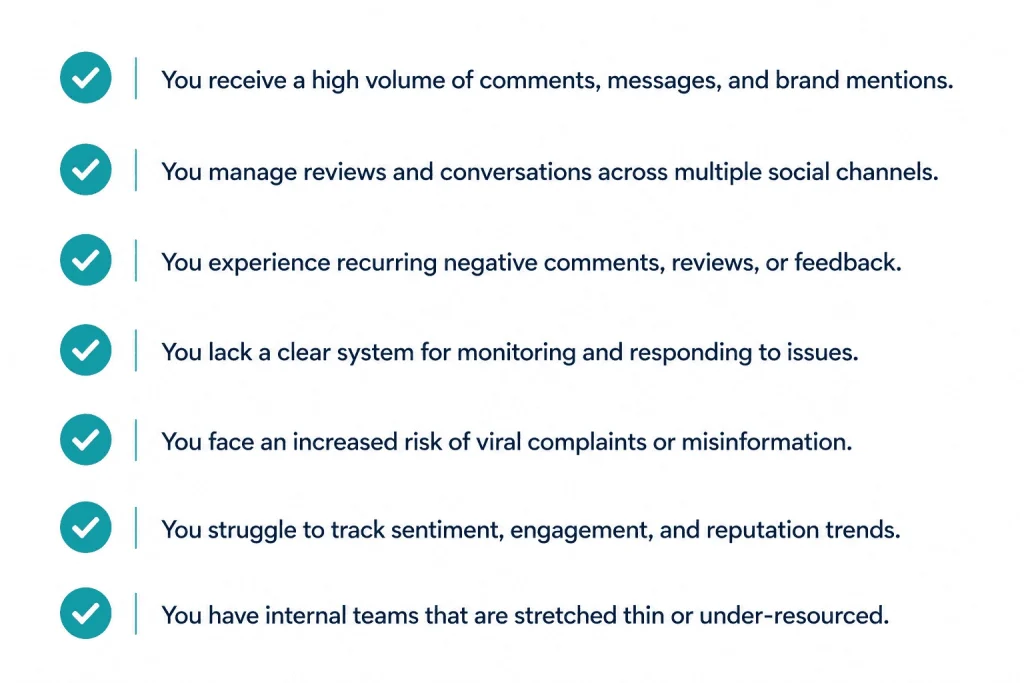
Use the checklist below to determine whether partnering with a social media reputation management company may be the right fit.
How Scopic Studios Can Help
Managing your reputation on social media takes more than responding to the occasional comment or review. It requires a consistent strategy that helps your brand stay active, engaged, and aligned across every platform.
At Scopic Studios, we help businesses build and maintain a strong social media presence through content planning, community engagement, performance reporting, and broader digital marketing support. Our team works to ensure your messaging stays consistent, your audience stays engaged, and your social media efforts support your overall business goals.
Whether you’re looking to improve brand visibility, create a more effective social media strategy, or better manage interactions with your audience, our social media management services can help.
Contact us to learn how we can support your business.
FAQs About Social Media Reputation Management
What is social media reputation management?
Social media reputation management is the process of monitoring, responding to, and managing conversations about your brand on social media. Its goal is to protect brand trust, address concerns, and maintain a positive public image across social platforms.
Why is social media reputation management important?
Social media directly influences how customers perceive your business. Effective social media marketing and online reputation management helps build trust, strengthen customer relationships, support buying decisions, and reduce the risk of negative issues escalating publicly.
How do you manage brand reputation on social media?
Managing brand reputation involves monitoring conversations, responding to feedback, escalating serious issues, resolving concerns, and reporting results. Consistently sharing valuable content can also help build trust and reinforce a positive brand image.
How should brands respond to negative comments on social media?
Brands should acknowledge concerns promptly, remain professional, and avoid becoming defensive. Address the issue with factual information, move sensitive discussions to private channels when appropriate, and follow up once the concern has been resolved.
What tools are used for social media reputation management?
Common tools include social listening platforms, review monitoring tools, sentiment analysis software, publishing and workflow management systems, and analytics dashboards. These tools help businesses track conversations, manage responses, and monitor reputation trends.
How is social media reputation management different from online reputation management?
Social media reputation management focuses on conversations and brand perception across social platforms. Online reputation management has a broader scope, covering search results, review sites, directories, media coverage, and other mentions across the web.
When should a business work with a social media reputation management company?
Businesses may benefit from professional support when managing high volumes of comments, recurring negative sentiment, or conversations across multiple platforms. It can also help when internal resources are limited or reputation risks are increasing.
About Social Media Reputation Management Guide
This guide was authored by Baily Ramsey, and reviewed by Sonja Somborac, SEO Specialist at Scopic Studios.
Scopic Studios delivers exceptional and engaging content rooted in our expertise across marketing and creative services. Our team of talented writers and digital experts excel in transforming intricate concepts into captivating narratives tailored for diverse industries. We’re passionate about crafting content that not only resonates but also drives value across all digital platforms.