
Listen to article
The telehealth market is growing at a CAGR of 24.60%, projected to reach $1,272.81 billion by 2034. That kind of growth attracts competition fast, and marketing telehealth services in a crowded space is a different challenge than traditional healthcare marketing. You are not only competing for attention, but also asking patients to change a deeply ingrained behavior and choose a care model many of them have never tried.
Effective telehealth marketing requires more than running a few telemedicine ads or publishing blog content. It requires a full-service marketing strategy where your website, your search presence, your paid ad campaigns, and your reputation all work toward the same outcome.
This guide covers how to market telehealth services from the ground up. Every channel, every strategy, every decision that goes into a full telehealth marketing plan. All of it backed by real client results.
Why Your Telehealth Marketing Is Not Bringing In Patients
When telehealth marketing is not delivering patient volume, the root cause is usually one of three things we see repeatedly across providers of all sizes.
Patients Do Not Trust What They Have Not Tried
Studies show that a lack of interest in telehealth is a barrier in 49% of cases, with patients consistently preferring in-person care and raising concerns about the quality of care. Patients who have never used virtual care need to understand what it is, how it works, and why it is a legitimate option. Effective telehealth marketing has to reach that audience, educate them, and then convert them.
The Path to Booking Is Longer
Even patients who are open to virtual care face practical friction before they book. Does their insurance cover it? What technology do they need? How does the actual appointment work? Each unanswered question is a drop-off point. Unlike traditional healthcare, where the path to booking is familiar, telehealth marketing requires patients to clear several logistical concerns first.
Telehealth Marketing Requires More Than One Channel
No single channel can carry telehealth marketing on its own. Paid ads drive traffic but do not build trust. SEO brings in patients, but cannot handle objections. Social content creates awareness but rarely converts directly. Each channel plays a specific role in moving a patient from first exposure to a booked appointment. When providers rely on one and neglect the others, the strategy breaks down at exactly the point it needs to hold together.
How to Market Telehealth Services
There are several components that go into marketing telehealth services effectively. Each one plays a specific role in how patients find you, evaluate you, and decide to book. The sections below walk through every component of a telehealth marketing strategy, so you know exactly what you are building toward and why.
Telehealth SEO Starts With Your Website
Telehealth is a digital service. When a potential patient visits your website, and it loads slowly, breaks on mobile, or looks outdated, their immediate conclusion is simple: if their website experience is this poor, what will my virtual care experience be like? That connection is automatic and almost impossible to recover from.
This is why website performance is not just a technical consideration in telehealth marketing. It is a trust signal specific to the nature of the service you provide. A slow, poorly structured website tells patients something about the quality of your virtual care before they have ever spoken to a provider.
Google reaches the same conclusion. Page speed, mobile performance, and site structure are confirmed ranking factors. A technically weak website will struggle to appear in search results regardless of how good your content is or how much you spend on ads.
One of the clearest examples of this is a concierge telemedicine provider whose website did not reflect the quality of their services. After a full redesign, they saw a 363.5% increase in website clicks and an 87.9% increase in search impressions, without changing anything about the care they provided.
Getting Found Through Search
Once you have the website sorted, the next question in telehealth marketing is whether patients can actually find it. And today, when the majority of healthcare searches start online, the answer to that has to be yes. If a patient is searching for virtual care and you are not showing up, they are booking with someone who is.
How Patients Search for Telehealth
Patients rarely search for a telehealth provider directly. They search their symptoms, look up how treatments compare, ask whether their insurance covers virtual visits, or search for a local doctor without even knowing telehealth is an option. Each of those is a different search intent, and each one is a moment where you could be showing up but might not be.
Many telehealth providers have been investing in marketing and SEO for years, so if you are not actively working on this, the providers who are will keep getting found first, regardless of whether their care is better than yours.
What Good Telehealth SEO Actually Looks Like
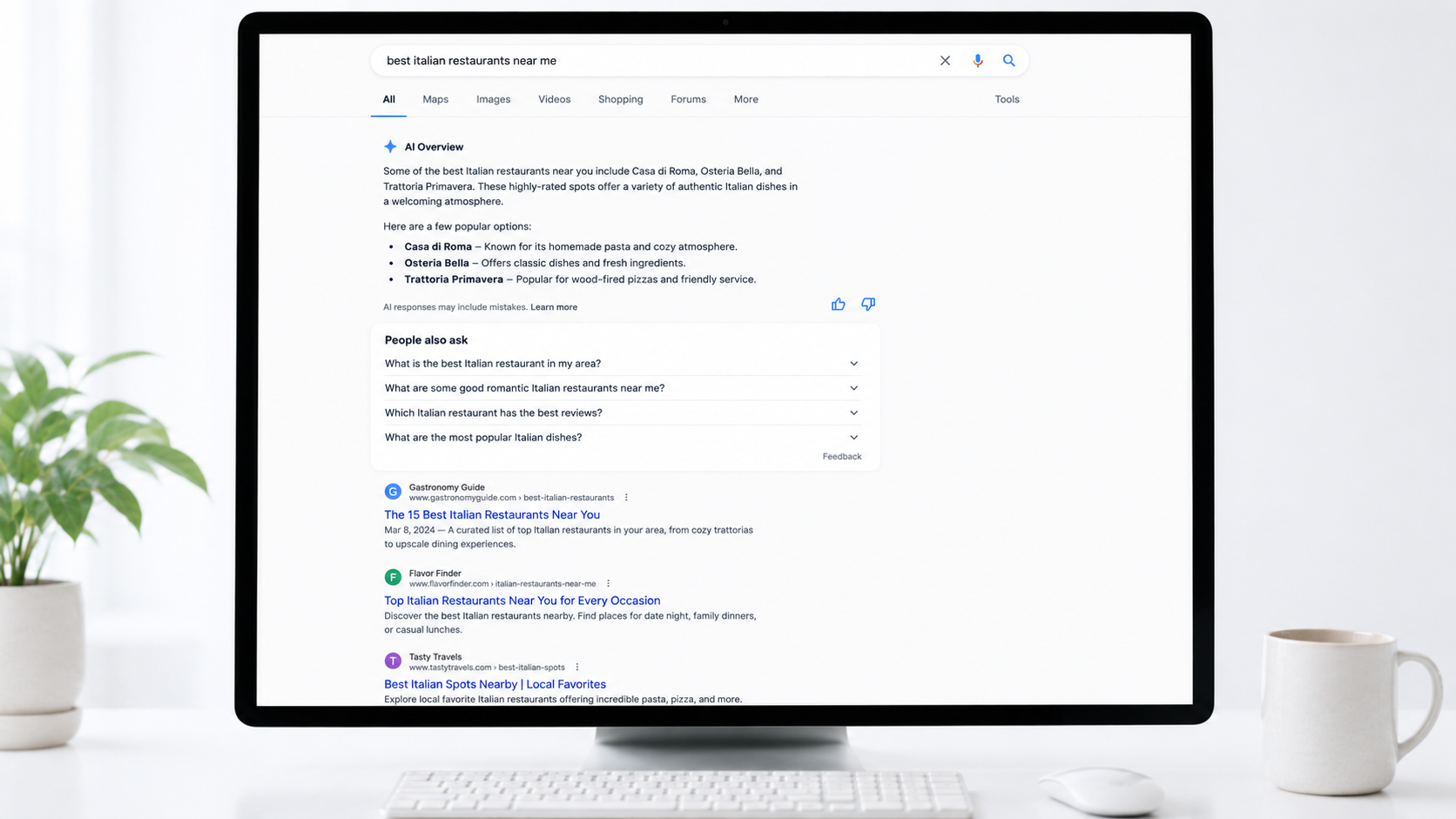
Good telehealth SEO means showing up across all of those patient intents, not just when someone is ready to book. It means content that is accurate, specific to what you treat, and structured in a way that meets Google’s credibility standards for healthcare. Patients are also increasingly starting their research through AI tools like ChatGPT and Google’s AI Overviews, which is why generative engine optimization, or GEO, is becoming part of a comprehensive telehealth marketing plan too.
To put this into perspective, one occupational telemedicine provider went from minimal search presence to 1,306% growth in organic search clicks and 3,881% growth in ranking keywords, simply by getting the SEO and GEO fundamentals right.
What Else Goes Into Telehealth Marketing
Having a solid website and showing up in search is a strong foundation for telehealth marketing. But patients do not always find you through search, and they do not always book the first time they do. There are other channels worth knowing about when it comes to marketing telehealth services.
PPC Advertising
Paid telehealth advertising allows you to show up for specific searches related to your telehealth services, whether that is a patient looking for an online therapist, a virtual urgent care visit, or a telehealth provider that accepts their insurance. You can control who sees your ads, when, and in which locations, which makes it one of the more precise ways to reach patients who are already looking for what you offer.
Social Media Marketing
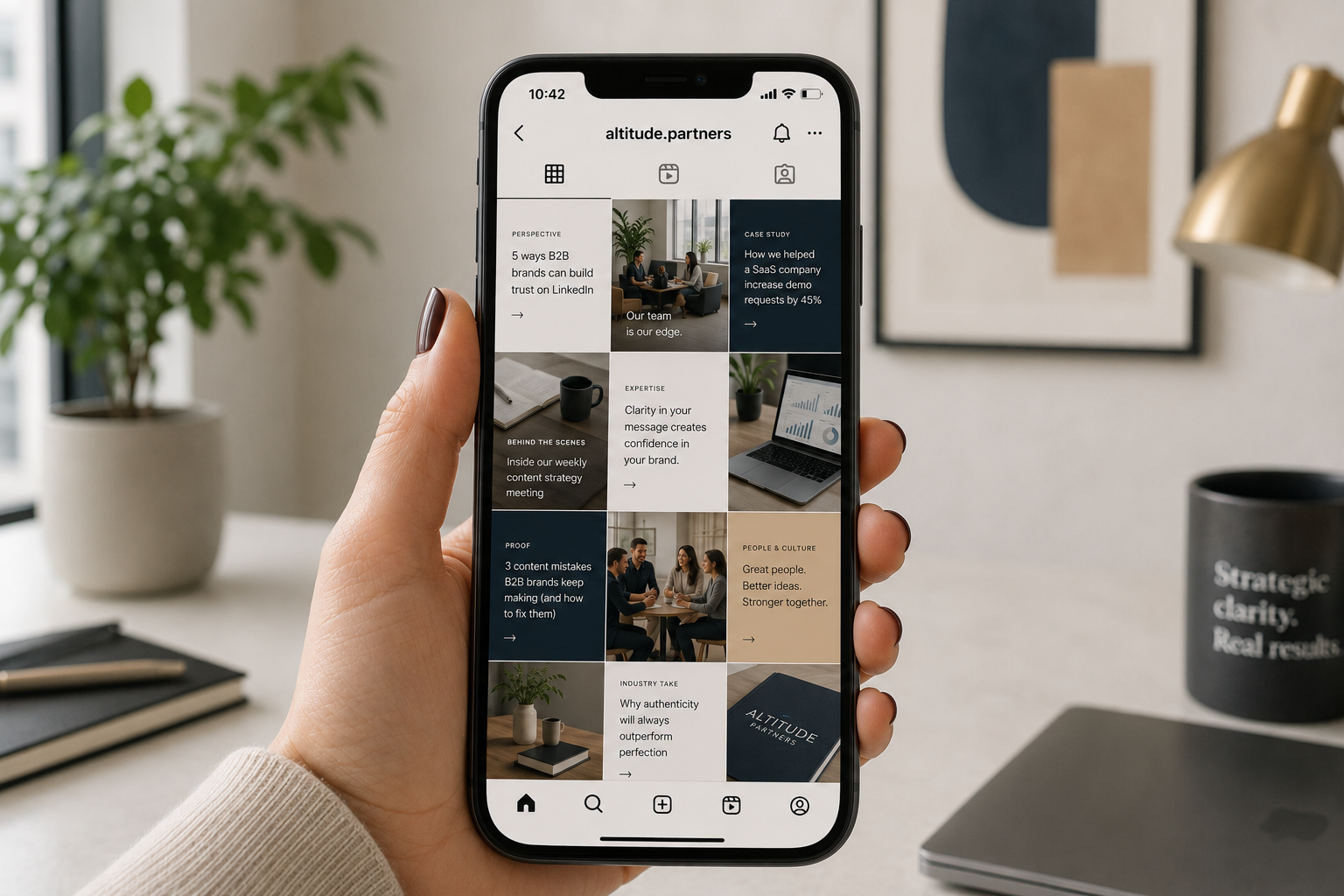
Through educational content, provider introductions, patient stories, and regular engagement, you stay visible and build trust with an audience that may not have considered virtual care yet. Paid telehealth ad campaigns on social media, on top of that, can extend your reach to specific patient demographics and locations.
Email Marketing
Email is one of the most versatile channels in telehealth marketing. It keeps existing patients informed about your virtual services, nurtures potential patients who have shown interest but have not booked yet, and re-engages those who have drifted away.
Beyond these three, there are smaller efforts that contribute to how patients find and perceive your telehealth practice. Online reviews, directory listings, referral partnerships with other providers, and consistent branding across every touchpoint all add up. Together with the channels above, they form a full-service telehealth marketing strategy where every piece reinforces the others.
Do You Need a Telehealth Marketing Strategy?
Not sure whether your telehealth practice needs a marketing strategy? Answer these seven yes or no questions to find out.
- When did you last get a new telehealth patient from an online search?
- If a patient searched for virtual care in your specialty right now, would they find you before your competitors?
- Do you have content online that addresses patient questions at every stage, from understanding their symptoms to figuring out how virtual care works?
- Do you know what your competitors are doing to attract telehealth patients online?
- Is your telehealth patient volume growing at the pace you expected?
- Do you have a clear picture of what is driving new patients to your telehealth practice?
- Six months from now, do you have a plan for where your telehealth patient volume will come from?
6 to 7 yes: Your telehealth marketing is in good shape. Focus on staying consistent and keeping ahead as competition grows.
3 to 5 yes: There are marketing gaps worth addressing. Patients are searching for what you offer and not always finding you.
Under 3 yes: Your practice is not reaching its potential. A structured telehealth marketing strategy would likely make a meaningful difference to your patient volume.
If you answered under 5, a full-service digital marketing agency with telehealth marketing experience can help you identify exactly where the gaps are and build a strategy around them.
Start Building Your Telehealth Marketing Plan Today
As more patients turn to the internet to find and evaluate their healthcare options, telehealth marketing is becoming less of a competitive advantage and more of a baseline requirement. The practices that invest in it now will be the ones patients find first.
Scopic Studios has helped telehealth providers deliver measurable results. A concierge telemedicine provider saw a 5,066% increase in conversion rate. An occupational telemedicine provider grew organic search clicks by 1,306%.
If you are ready to see what a full-service healthcare marketing strategy looks like for your practice, schedule a free consultation.
Frequently Asked Questions
What is telehealth marketing?
Telehealth marketing is the process of promoting virtual care services to attract and convert patients online. It covers everything from how your website performs to how you show up in search, how you run paid campaigns, and how patients perceive your practice before they ever book an appointment.
How do I promote telehealth services?
Promoting telehealth services effectively means showing up where patients are already looking. That starts with a website that loads fast and builds trust before a patient ever speaks to a provider. From there, SEO puts you in front of patients searching for virtual care at every stage of their journey. Paid advertising gets you visible immediately. Social media builds familiarity over time. And email keeps existing patients engaged and aware of your virtual care options. None of these works as well in isolation as they do together.
Do I need a telehealth marketing?
If your telehealth practice is not growing at the pace you expected, the honest answer is yes. Most providers who are not investing in marketing are invisible to the patients actively searching for virtual care in their specialty. Those patients are booking with someone else, usually a provider who has been investing in their online presence consistently.
How much does telehealth marketing cost?
It depends on the channels, the size of your practice, and your market. Scopic Studios works with telehealth providers starting at $40 per hour, with strategies tailored to the specific channels and goals that make sense for your practice.
Will my telehealth practice show up in AI tools like ChatGPT?
Increasingly, patients are starting their healthcare research through AI tools. Showing up there requires a specific approach called generative engine optimization, or GEO, which focuses on how your content is structured and cited across the web. Most telehealth providers are not visible in these results yet, which means there is a real opportunity for those who move early. A full-service digital marketing agency with GEO experience can audit your current visibility and identify exactly where you are missing out. Reach out for a free AI visibility audit.
Can I handle telehealth marketing on my own?
It depends on your resources and how competitive your market is. The basics, setting up a website, creating some content, and being active on social media, are manageable in-house. Where it gets harder is the technical side of SEO, paid advertising compliance in healthcare, and building the kind of consistent presence that actually drives patient volume. Most providers who try to handle everything internally find that marketing gets deprioritized when clinical operations get busy.
How do I know if my current telehealth marketing is working?
The clearest signal is whether new patients are finding you online without you directing them there. Beyond that, if you cannot answer where your last ten telehealth patients came from, that is a sign your marketing lacks the tracking and structure needed to evaluate what is working and what is not. Booked appointments, not traffic or impressions, are the metric that tells you the truth.
Do I need a dedicated agency for telehealth marketing?
If your patient volume is where you want it to be and you have a clear picture of what is driving growth, an agency may not be necessary right now. But if you are trying to grow in a competitive market or struggling to build search visibility against competitors, working with an agency that has done this specifically in telehealth will save you significant time and money.
About: Telehealth Marketing: How to Promote Your Telehealth Services
This guide was written by Mikheil Kandaurishvili and reviewed by Assia Belmokhtar, SEO Lead at Scopic Studios.
Scopic Studios delivers exceptional and engaging content rooted in our expertise across marketing and creative services. Our team of talented writers and digital experts excel in transforming intricate concepts into captivating narratives tailored for diverse industries. We’re passionate about crafting content that not only resonates but also drives value across all digital platforms.
Note: This blog’s images are created with DALL·E.