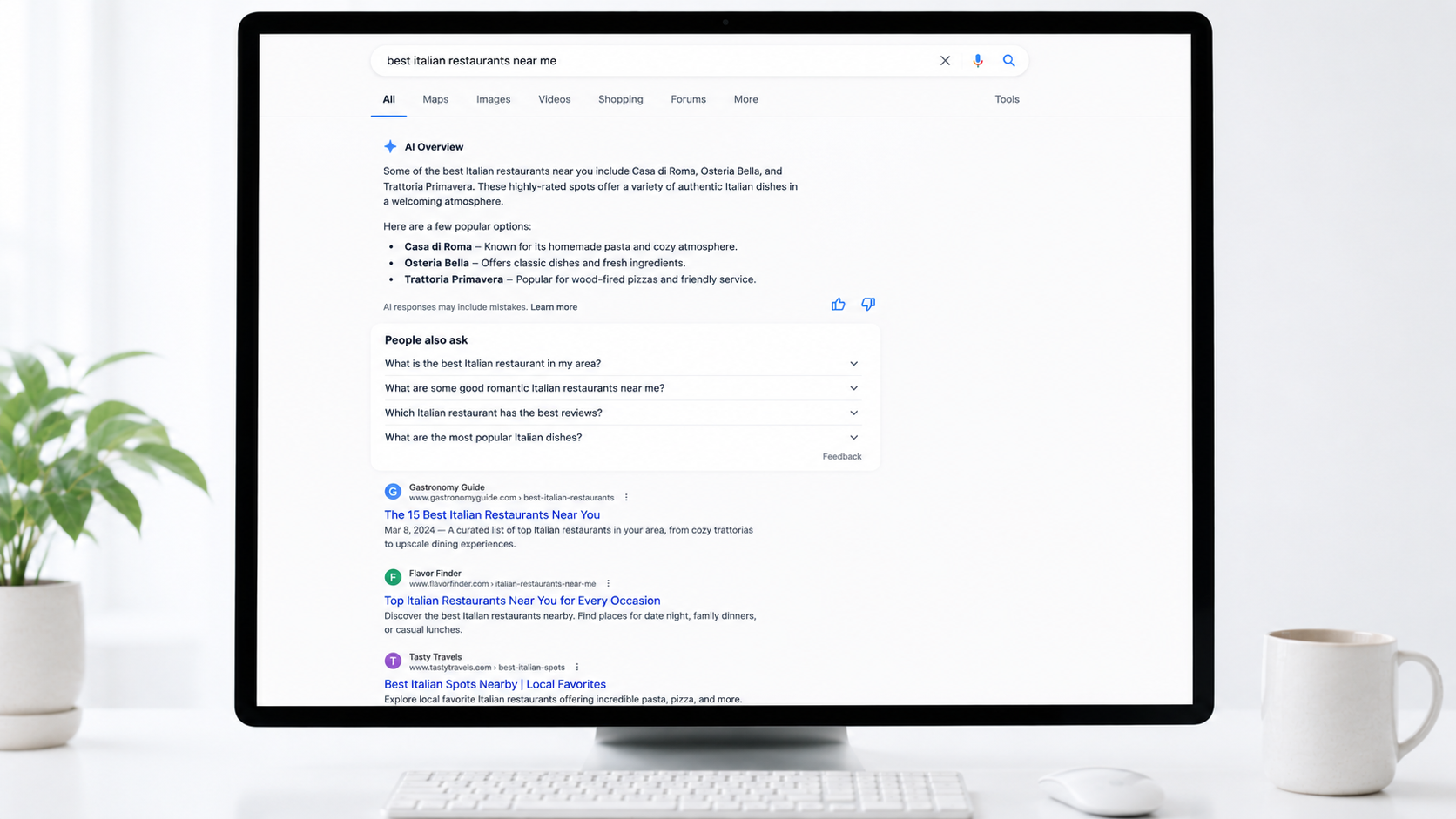
The Mobile-First Imperative in PPC: Why Mobile Demands Active Management
Most PPC campaigns are built once and monitored passively. That approach fails on mobile. Mobile and desktop operate with separate Quality Scores, so optimizations that work on one platform don’t automatically transfer to the other. Neglecting mobile-specific tuning directly impacts campaign economics: poor Quality Scores, lower ad rank, higher cost per acquisition, and missed conversions.
Mobile users behave fundamentally differently than desktop users. They’re often on the go, searching for quick, location-based information in short sessions. They favor conversational queries—”Where’s the nearest coffee shop?”—and engage in high-intent “micro-moments” that demand immediate answers. Desktop users, by contrast, spend longer in sessions, conducting research and completing higher-value purchases.
This behavioral split requires distinct strategies:
- Keyword research: Prioritize shorter, conversational, and location-based queries, including voice search patterns.
- Ad copy: Keep it concise, benefit-focused, and use mobile-specific CTAs like “Call Now” or “Get Directions.”
- Landing pages: Load in under three seconds, feature clear CTAs, simple navigation, and minimal distractions.
- Conversion tracking: Use cross-device tracking to capture conversions that start on mobile and finish on desktop.
Mobile PPC success isn’t just about targeting—it’s driven by creatives and user experience. Continuous testing of hooks, visuals, and CTAs identifies what resonates. Without cross-device conversion tracking, you’re attributing conversions incorrectly and optimizing for the wrong signals.
Mobile-Specific Ad Formats: Choosing the Right Format for Your Conversion Goal
Google Ads offers three primary mobile-optimized formats, each serving a distinct conversion path:
Call-Only and Call-Focused Responsive Ads
Call-only ads drive phone calls directly from search results, appearing exclusively on devices that can make calls. They eliminate the website step entirely, ideal for businesses where phone conversations convert better than web visits—emergency services, medical practices, and law firms being common examples.
In 2024, Google began phasing out standalone call-only ads in favor of responsive search ads (RSAs) enhanced with call-focused elements. The responsive format automatically tests combinations of up to 15 headlines and 4 descriptions to identify the highest-performing version.
To configure a call-optimized RSA:
- Select “Phone calls” as the conversion action during campaign setup
- Add a verified business phone number
- Uncheck the Display Network to keep traffic on search
- Include a final URL (Google uses it to evaluate ad relevance and quality)
- Pair with ad scheduling to match business hours and device targeting to prioritize mobile traffic
Responsive Display and App Promotion Ads
Responsive display ads automatically adjust size, appearance, and format to fit available ad spaces. They work well in Display campaigns when you want broad reach with minimal creative overhead.
App promotion ads drive installs and engagement by sending users to app stores or deep-linking into the app. They appear only on devices compatible with the app content, making them a precise tool for mobile app marketers focused on acquisition and retention.
Match the format to the conversion action, not the other way around.
Mobile Bid Adjustment Strategy: Layering and Optimization
Bid adjustments allow you to increase or decrease bids by a percentage based on device type, location, and time of day. If mobile traffic converts better, you raise the bid by a specific percentage—say, 20%—for mobile devices. If performance lags, you lower it. This control helps manage ad spend efficiently and improve ROI.
How Adjustments Layer
When multiple bid adjustments apply to the same impression, the percentages multiply together rather than add. Google Ads prioritizes ad group-level adjustments over campaign-level ones. Smart Bidding strategies may override manual bid adjustments, but mobile bid adjustments remain an exception: you can still apply them, including a -100% adjustment to exclude mobile traffic entirely. Enhanced CPC (ECPC) allows layering additional bid adjustments on top of its automated changes.
Building a Multi-Variable Model
An effective model starts with defining campaign goals and identifying target audiences. From there, choose bidding strategies for each segment and set bid limits to prevent overspend. Examples:
- Increase bids for mobile devices in a location with high engagement and conversions
- Decrease bids for desktop devices in the same location if performance is weak
- Raise bids during peak hours when your target audience is most active
- Layer adjustments by audience demographics, ad format, and keywords
Continuous Monitoring
Effective bid management requires continuous monitoring. Set up custom alerts for performance thresholds, analyze conversion data regularly, and conduct competitive analysis to stay responsive. Iterative testing and optimization ensure your bid adjustments reflect current performance rather than outdated assumptions.
Crafting High-Converting Mobile Landing Pages: Speed, Simplicity, and Clear Conversion Paths
Mobile landing pages live or die by load time and user experience. Users abandon pages that take longer than three seconds to load. Optimize images using WebP format, minify JavaScript and CSS, enable lazy loading for below-the-fold content, and leverage content delivery networks (CDNs) to reduce latency. Consider implementing Accelerated Mobile Pages (AMP) or highly optimized HTML5 for near-instant rendering.
Design Principles for Mobile Conversion
Simplicity: Mobile screens demand minimalist design. Remove sidebars, excessive navigation, and intrusive pop-ups. Use single-column layouts with bullet points for features, and keep forms short. Reducing form fields from eleven to four can more than double conversions. Ask only for essentials: name, email, phone number. Enable auto-fill, use smart inputs like number keypads for phone fields, and offer social login options to reduce friction.
Thumb-Friendly Interaction: Mobile users navigate with their thumbs. Place CTAs within easy reach, make buttons at least 44 pixels high, and use contrasting colors with action-oriented copy. Position at least one CTA above the fold and consider sticky CTA bars for longer pages to keep conversion opportunities always visible.
Typography and Readability: Use a minimum of 16 pixels for body copy, keep headlines brief (three to eight words), and front-load value with benefits-focused messaging. Generous whitespace and high-contrast design improve readability and guide users toward desired actions.
Click-to-Call and Direct Engagement
Phone calls convert at rates far higher than clicks alone. Code phone numbers as clickable tel: links, making them tap-to-dial friendly. For service businesses, emphasize quick response times and consider call-back widgets that invite users to leave their number.
Why Mobile Conversion Rates Lag Desktop
Mobile traffic typically makes up a significant portion of total visits, yet conversion performance lags behind desktop by a consistent margin. This disparity is not a mobile-specific failure—it reflects structural differences in user behavior, device constraints, and friction points that desktop experiences rarely encounter.
A conversion rate ratio of roughly 2:1 (desktop to mobile) is a reasonable baseline. When mobile falls below 40% of desktop conversion performance, the gap signals fixable problems—usually rooted in UX or technical execution.
Common mobile conversion barriers:
- Small touch targets and poor form functionality
- Hidden or broken content
- Checkout friction and cart abandonment
- Performance issues (each additional second of load time can reduce conversions significantly)
If your mobile PPC campaigns are driving traffic but underperforming on conversions, audit the post-click experience first. Test forms on actual devices, measure load times under real network conditions, and identify where users drop off. Smaller, performance-tuned mobile sites consistently show narrower conversion gaps.
Mobile Intent Patterns: Tailoring Strategy by Device and Industry
Mobile search carries a sense of immediacy—users expect quick fixes, fast answers, and location-based results. Desktop is the domain of complex research, detailed comparisons, and work-related queries. This split means your mobile PPC strategy cannot simply mirror your desktop approach; it requires distinct targeting, ad copy, and bidding logic.
Keyword Strategy for Mobile
Mobile queries tend to be longer, driven by ease of typing and the rise of voice search. Yet mobile users also type shorter, less precise queries with spelling errors or missing words, especially when searching on the move. Your keyword strategy must account for both extremes: conversational long-tail phrases for voice search and forgiving match types for fragmented queries.
Timing and Context
Mobile usage peaks in the morning and evening, while desktop dominates working hours. This temporal pattern should inform your bid adjustments and dayparting strategy. For B2C campaigns, mobile is where intent converts—especially for local searches and “near me” queries. For B2B, desktop still handles the heavy lifting of research and formal procurement, but mobile captures early-stage awareness and on-the-go decision-makers.
Industry-Specific Approach
The likelihood of mobile conversion varies by industry and audience. B2C sectors with transactional intent—retail, food, local services—see higher mobile conversion rates. B2B campaigns often require multi-touch attribution across devices, with mobile serving as an entry point rather than the close. Tailor your mobile PPC approach accordingly: prioritize call-only ads and location extensions for local B2C, and use mobile to capture research intent with content-driven landing pages in B2B.
Accurate Mobile Conversion Tracking: Connecting Clicks to Real-World Outcomes
Mobile PPC campaigns often drive actions that happen outside the browser—phone calls, in-store visits, or purchases completed days later. Relying only on click data leaves you optimizing toward incomplete signals.
Click-Based Conversion Tracking
For conversions from clicks, Google Ads assigns a unique Google Click ID (GCLID) to each interaction. Your CRM captures this identifier alongside lead details—email, phone number, transaction ID—and later uploads it with conversion data. Enhanced conversions for leads layer in hashed first-party data (email addresses, for example) to improve match accuracy.
Call Tracking and Attribution
Phone calls signal higher intent than most form fills, especially in high-ticket or service-based industries. Dynamic Number Insertion (DNI) assigns unique forwarding numbers to visitors based on traffic source, letting you attribute calls to specific mobile campaigns, keywords, or ads. Call tracking platforms integrate with Google Ads to pass conversion data automatically, including call duration, outcome (qualified lead, appointment booked), and revenue.
Define conversion criteria carefully—most teams set thresholds at 60 to 90 seconds to filter out misdials and unqualified inquiries. Capture UTM parameters and click IDs (gclid, fbclid) at the first touchpoint so every call ties back to the exact ad that drove it.
Offline Conversion Imports
Sales cycles don’t end at the call or form fill. Offline conversion imports handle the lag between initial contact and closed revenue, sending final deal data back to ad platforms. This lets Google Ads optimize bidding toward outcomes that matter—closed sales, not just clicks or calls. Regular data uploads, clean CRM hygiene, and monitoring match rates keep attribution accurate as privacy regulations tighten.
Integrating Mobile PPC with Mobile-First Web Design
Mobile PPC campaigns drive traffic to landing pages, and those pages must be built for the devices users actually carry. Mobile-first design starts with the constraints of small screens, forcing prioritization of essential content, streamlined layouts, and optimized performance. This approach builds for mobile users first, then scales up for larger screens—rather than adapting a desktop experience downward.
The alignment matters because mobile devices account for a significant share of all web traffic. When a user clicks a mobile ad, they expect immediate clarity and fast load times. Mobile-first design delivers both by compressing images, refining code, and reducing unnecessary assets. It also aligns with Google’s mobile-first indexing, which means pages optimized for mobile rank better—amplifying the organic value of paid traffic.
Core Principles
Mobile-first design prioritizes content inventory and hierarchy. Essential information appears first, with simplified navigation like hamburger menus or bottom bars. Touch-friendly elements—larger targets, proper spacing—reduce friction for users arriving from call-only ads or click-to-call extensions.
Progressive enhancement is central: you design the smallest screen first, then add features as screen size grows. This ensures mobile users get a complete, functional experience without waiting for desktop-oriented assets to load. Fluid grids, flexible images, and media queries create responsive layouts that adapt without breaking.
Practical Integration
When you optimize Google Ads for mobile, you’re controlling bids, ad formats, and targeting. Mobile-first design extends that control to the post-click experience. A mobile PPC campaign with strong bid adjustments loses value if the landing page loads slowly or buries the conversion action below the fold.
Build landing pages that reflect the same prioritization as your mobile PPC strategy: clear calls-to-action, minimal form fields, and fast performance. Test across devices to confirm that touch interactions work and that load times meet Core Web Vitals benchmarks. This integration turns mobile PPC traffic into conversions, not bounces.
Key Takeaways: Building Systems for Sustainable Mobile PPC Performance
Mobile PPC is not a one-time setup. It is an ongoing operational discipline that requires continuous analysis, testing, and adjustment. Separate Quality Scores exist for mobile and desktop, which means your mobile strategy must be tailored at the campaign structure, bidding, and creative level.
Success depends on:
- Mobile-friendly landing pages with fast load times and clear CTAs
- Mobile-specific keywords and ad extensions built for smaller screens and on-the-go behavior
- Continuous testing of creatives, hooks, and CTAs to identify what resonates
- Cross-device conversion tracking to understand the full customer journey
- Regular monitoring of device performance data to inform bid adjustments and budget allocation
Mobile PPC is not about chasing trends—it is about building repeatable systems that adapt to user behavior, platform changes, and market conditions. The teams that win in mobile PPC are the ones that treat optimization as a process, not a project.
Scopic Studios delivers exceptional and engaging content rooted in our expertise across marketing and creative services. Our team of talented writers and digital experts excel in transforming intricate concepts into captivating narratives tailored for diverse industries. We’re passionate about crafting content that not only resonates but also drives value across all digital platforms.