Introduction: Does Local PPC Really Work for Small Businesses?
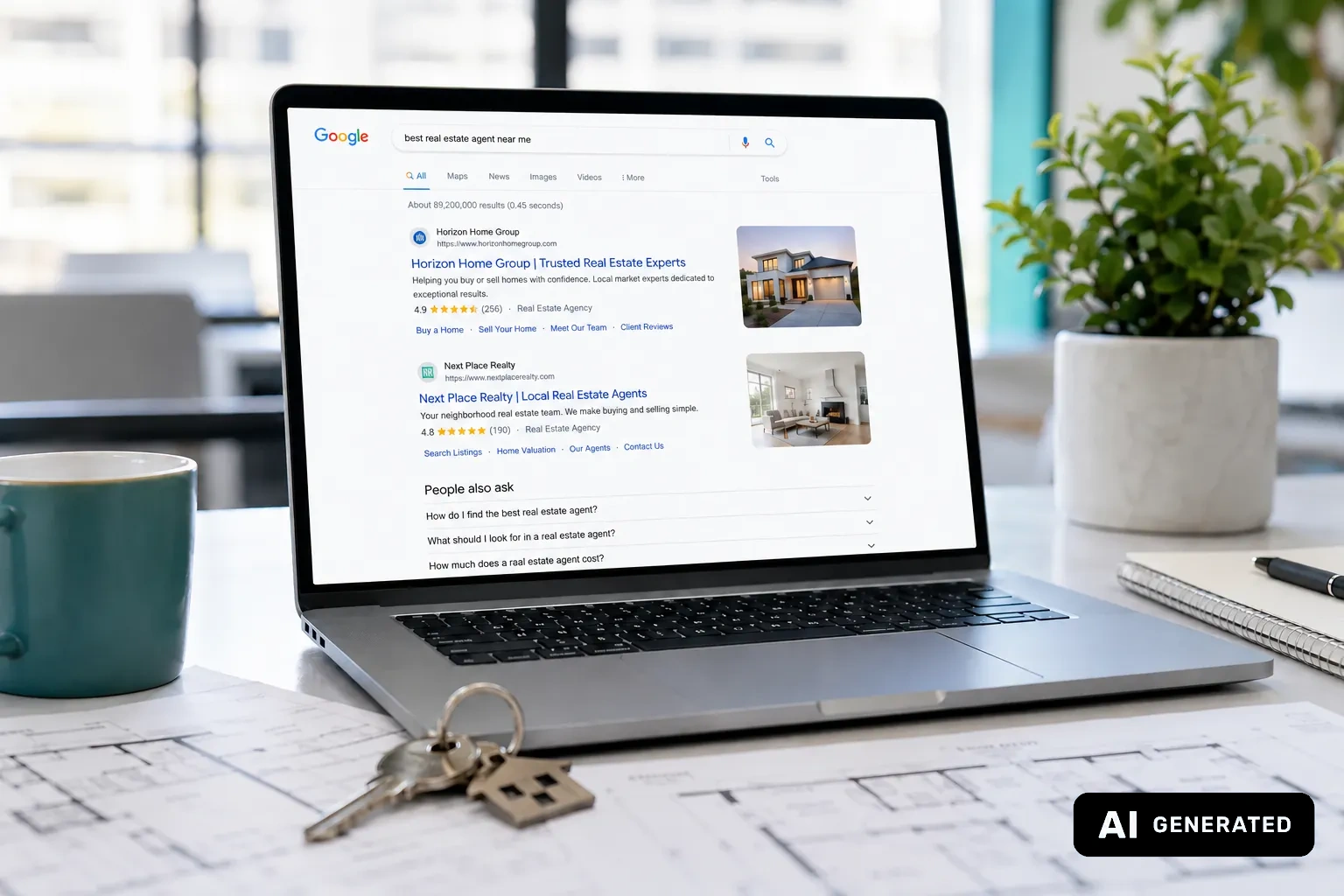
Local PPC delivers measurable results for small businesses that need visibility immediately. Unlike organic SEO, which requires sustained effort before ranking, paid search places your business at the top of search results—often above organic listings and inside the Map Pack on Google.
The mechanics are straightforward: over 70% of people use search engines when making purchases, and a significant portion of those searches have local intent. Local paid search ads target users actively looking for products or services in a specific geographic area. These are high-intent prospects—people who have already decided they need something and are comparing options nearby.
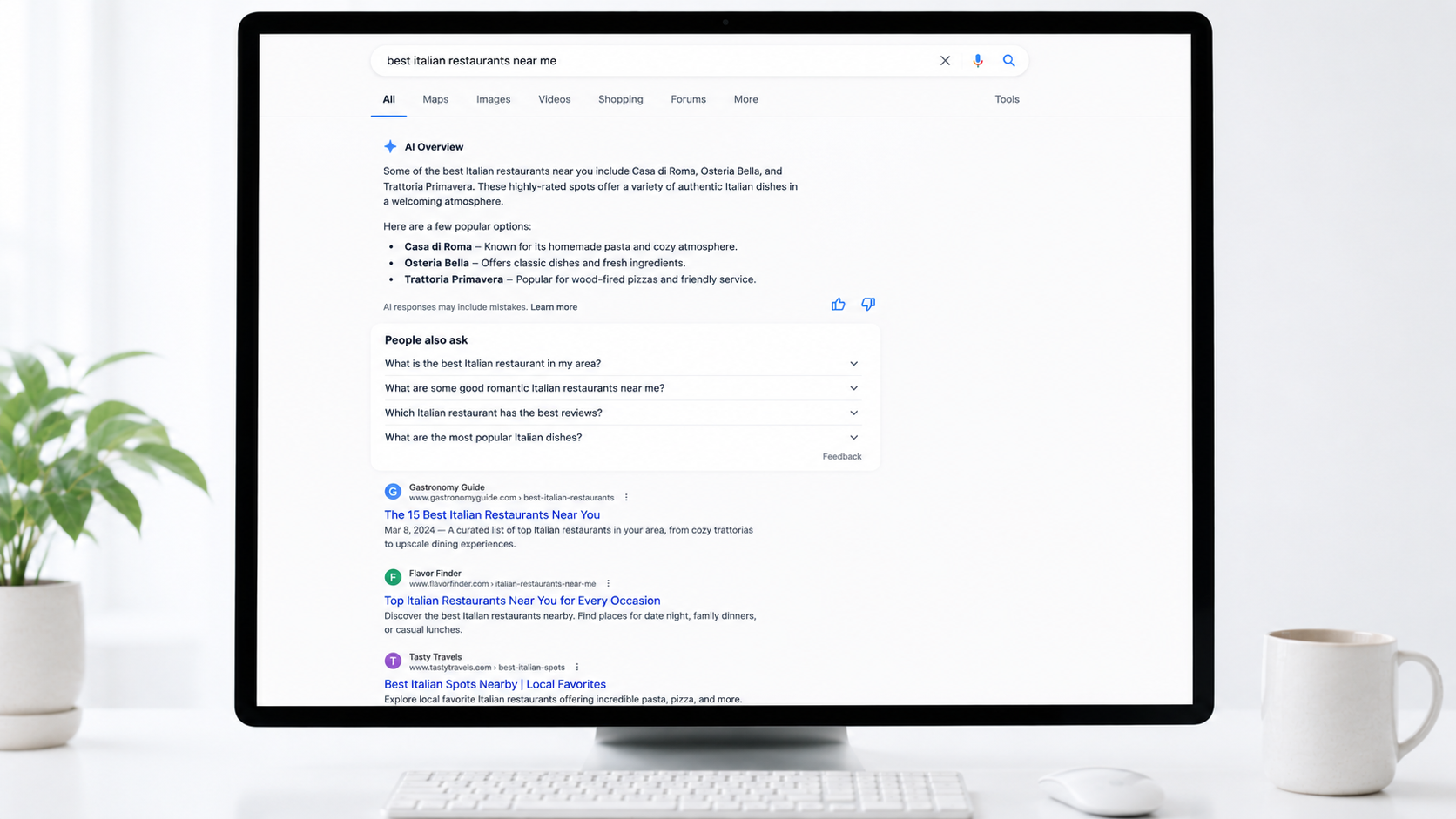
Local PPC ads appear in prime positions: labeled as “ad” or “sponsored” at the top of search results, within the Map Pack, and inside the Google Maps app. This visibility intercepts demand at the moment of decision, not during passive browsing.
Success in local PPC isn’t about outspending competitors; it’s about precision. Targeting determines performance. Well-configured campaigns reach the right people in the right area at the right time—eliminating waste and improving conversion rates. For new businesses or those building an online presence, local PPC solves the cold-start problem by generating leads from day one while longer-term strategies like local SEO best practices take hold.
What Is Local PPC?
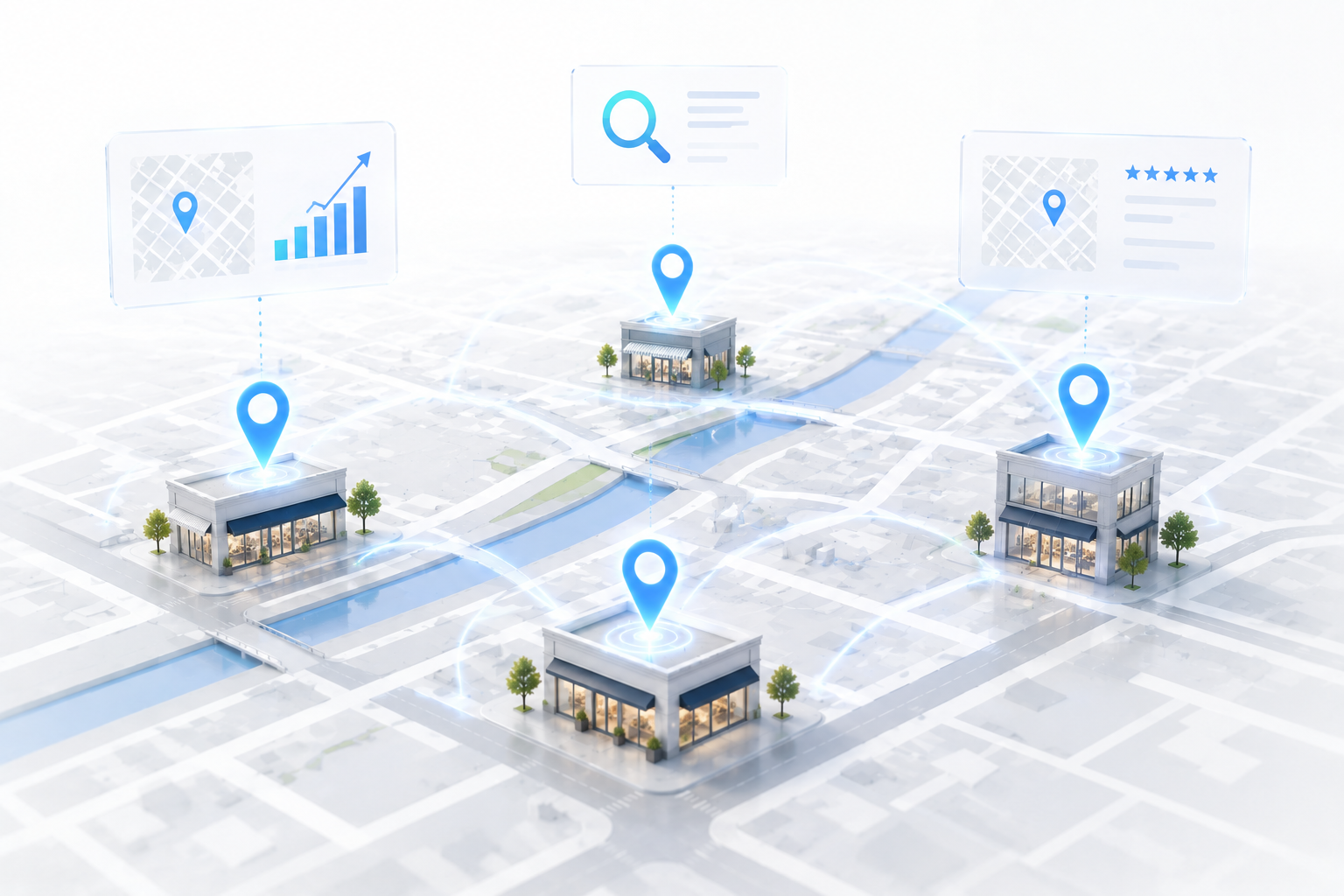
Local PPC is a paid advertising model that targets customers within a specific geographic area. Unlike traditional PPC campaigns that cast a wide net, local paid search focuses on connecting businesses with nearby prospects actively searching for their services. For small businesses, this means budget goes toward users who can realistically become customers.
Google Search Ads
Traditional Google Search campaigns allow businesses to bid on specific keywords and control where ads appear geographically. You pay each time someone clicks your ad. Search campaigns offer extensive customization: control over ad copy, keyword selection and match types, negative keywords, and A/B testing. This flexibility makes them scalable for businesses that need precise control over messaging and optimization.
Local Services Ads (LSA)
Google Local Services Ads operate on a different model: businesses pay only when a potential customer contacts them—through a call, message, or booking. LSAs appear at the top of search results, above both organic listings and traditional search ads. They’re designed for service-based businesses in industries like home services, legal, healthcare, automotive, and wellness.
Setup is faster than Search campaigns. Google automates most keyword and ad copy decisions after you provide business details, service type, location, and budget. However, this automation means limited control—you cannot manually adjust keywords or write custom ad copy. Reviews matter significantly; they display prominently and influence ad ranking alongside response rate and location relevance.
LSAs require business verification, including background checks, insurance, and license verification. Once approved, ads display trust badges like Google Guaranteed or Google Screened. A verified Google Business Profile is mandatory for LSAs.
Display and Video Campaigns
Display, Video, and Performance Max campaigns can support local brand awareness, particularly for higher-priced services or products requiring sustained visibility. These work best as supplementary channels rather than primary lead drivers for most small businesses.
Performance Benchmarks: CTR, CPC, Conversion Rate, and Cost Per Lead
Understanding what “good” performance looks like helps small businesses set realistic expectations and budget accordingly. Benchmarks vary significantly by industry, but cross-industry data provides a useful starting point.
Core Metrics
For Google Search ads in 2025, average benchmarks sit at a 6.66% click-through rate $5.26 cost per click, and 7.52% conversion rate. These figures represent a blend of all industries and campaign types, so your actual performance will depend heavily on your vertical and local market dynamics.
Return on Ad Spend (ROAS) across Google Ads campaigns typically lands near 3.5:1, meaning every dollar invested returns approximately $3.50. This ratio serves as a baseline for evaluating campaign profitability, though businesses with longer sales cycles may tolerate lower initial ROAS while building pipeline.
Industry Variation
The spread between industries is substantial. Home services typically see higher costs per click—around $6.40—but also stronger conversion rates near 5%. Legal services face the steepest CPCs, often exceeding $8, while arts, entertainment, and food-related businesses benefit from lower acquisition costs, sometimes under $2 per click. Ecommerce and retail operations often secure clicks for roughly $1.16, though conversion rates tend to be lower. Automotive repair and pet services demonstrate some of the strongest conversion performance, frequently converting above 13% of clicks into leads or sales.
Mobile traffic generally costs less per click, but conversion behavior differs, so channel-level analysis matters for budget allocation.
Cost Per Lead by Industry
Cost Per Lead (CPL) varies significantly by vertical. Legal services leads average $111.86 on Google Ads, while automotive repair sits at $19.85. Restaurants and food businesses see CPLs around $27.18, and real estate typically lands near $49.25. Home improvement contractors can expect roughly $53.50 per lead, while finance and insurance average $61.38.
For B2B and professional services, costs climb higher. Legal services in the B2B space can reach $650 per lead, software development around $595, and IT and managed services approximately $501. Construction sits lower at $227, making it one of the more accessible verticals for small businesses testing local PPC.
Budget Planning by Market Size
Geography matters as much as industry. In small cities and rural markets, monthly PPC budgets between $1,000 and $2,500 typically generate meaningful lead volume. Mid-size cities require $5,000 to $10,000 per month for consistent visibility. Large metropolitan areas demand $10,000 to $25,000 or more, with cost-per-click rates climbing significantly higher than smaller markets.
Small businesses with fewer than 50 employees typically pay $146 per lead across channels, while larger organizations see CPLs rise to $429. This gap reflects both targeting precision and competitive pressure.
When evaluating local PPC viability: Compare your industry’s typical CPL against your customer lifetime value and close rate. A $50 lead means little if your average sale is $200 with a 10% close rate. Conversely, a $500 lead can work if you close 30% at $5,000 average contract value. Budget should align with market size, competitive density, and the lead volume required to hit revenue targets. Start with the lower end of your market tier, measure actual CPL and conversion rates, then scale based on performance data.
Where Local PPC Works Best
Local PPC works best in industries where searchers have immediate, actionable intent and geographic constraints matter. Restaurants, retail stores, professional services, and home service businesses consistently see strong returns because their customers search with urgency and proximity in mind.
High-Intent Verticals
A bakery, plumber, or yoga studio can capture demand at the moment someone types “near me” or includes a city name in their query. Geographic targeting varies by vertical. Retail and food businesses typically set radius targeting at 3–5 miles, while home services expand to 10–15 miles, and specialized medical practices may reach 25+ miles.
Dental practices represent a particularly strong use case. Dental PPC agencies focus on increasing online visibility, generating qualified leads, and converting site visitors into new patients. Campaigns target service + location keywords (e.g., “dentist Seattle”) and long-tail intent phrases like “emergency dental care near me.”
Legal and professional services follow similar patterns: high transaction value, local service areas, and phone-driven conversions make call extensions and call-only ads essential.
Home service providers—plumbers, electricians, HVAC technicians—benefit from mobile-first ad copy, location extensions that display address and phone number directly in ads, and dayparting to align spend with peak call times. Emergency keywords (“24-hour plumber water leak”) capture high-intent traffic.
Restaurants and retail rely on proximity and immediacy. Location assets drive store visits, and remarketing to local searchers keeps your business visible after the initial search.
Budget floors depend on market competitiveness: $500–1,000 monthly works in moderate markets, while highly competitive verticals require $1,500–3,000 to maintain visibility.
Where Local PPC Struggles
Local PPC campaigns can struggle in specific scenarios, particularly when search volume is thin or targeting settings pull in the wrong audience. Understanding these failure modes helps small businesses avoid wasted spend.
Common Targeting Mistakes
One of the most common pitfalls is using Google’s “people interested in your target location” setting instead of “people in your target location only.” The former pulls in researchers from out of state—consultants, students, or competitors—who have no intention of becoming customers. This targeting mistake generates low-quality traffic that consumes budget without producing leads.
Similarly, running ads 24/7 when your sales team only works business hours wastes clicks. After-hours traffic may convert on forms, but if no one follows up promptly, those leads cool or disappear entirely. Broad match keywords without a comprehensive negative keyword list compound the problem, triggering ads for irrelevant queries.
Low Search Volume and Thin Budgets
Local PPC for B2B or niche services often faces search volumes of only 200–500 monthly searches per city. This scarcity makes Google’s machine learning less effective, especially when paired with automated bidding strategies like Target CPA or Maximize Conversions. These tools require at least 20 conversions per month to optimize properly; below that threshold, they flounder.
High CPCs—often $25–$80 in B2B local campaigns—further strain thin budgets. For single-location service businesses in mid-size cities, budgets under $3,000 per month rarely give Google enough room to test, learn, and deliver conversions before the money runs out. Conversion delays of 30–90 days and standard attribution windows that miss long sales cycles only deepen the disconnect between spend and measurable return.
Manual CPC bidding and tightly scoped targeting become necessary workarounds, but they demand more hands-on management and realistic timelines.
Local PPC vs. Local SEO: When to Use Each
Choosing between local PPC and local SEO isn’t binary—it’s about timing, budget, and business stage. Both channels serve distinct functions in a local marketing system.
Local PPC: Immediate Visibility
Local paid search advertising delivers immediate placement in search results. If you need leads this week—launching a new service, filling seasonal capacity, or testing a new market—PPC provides predictable traffic tied directly to ad spend. You control geographic targeting down to ZIP codes, ensuring only relevant local audiences see your ads.
The tradeoff: visibility depends entirely on continuous budget. Stop paying, and traffic stops. Cost per click escalates quickly in competitive local markets. PPC is effective for short-term campaigns, promotions, or when you need to validate demand before committing to longer-term strategies.
Local SEO: Sustainable Organic Visibility
SEO builds sustainable organic visibility without paying per visitor. It requires upfront investment in on-page optimization, content creation, and local citations, but results compound over time. Most businesses see meaningful traction within 6–12 months. Once rankings stabilize, acquisition costs drop significantly compared to paid channels.
Local SEO establishes credibility in Google’s organic listings through optimized landing pages, consistent NAP details, and content targeting local intent keywords. It’s the foundation for businesses prioritizing long-term growth over immediate volume.
The Integrated Approach
For most local service businesses, combining both strategies delivers the best outcome. Use local PPC campaigns to generate leads immediately while SEO builds momentum. PPC fills gaps during critical periods—peak seasons, product launches—while SEO reduces reliance on paid traffic over time. This dual-channel system maximizes visibility across search results and balances short-term revenue with sustainable growth.
Operational Requirements: Campaign Management and Optimization
Local PPC requires planning, expertise, and budget—but execution is where most campaigns fall short. Ongoing management is critical; campaigns need to be monitored, refined, and aligned with growth goals for best results.
Why Continuous Optimization Matters
Without ongoing oversight, ad spend leaks into underperforming keywords, misaligned audiences, and stale creative that no longer converts. Campaign performance degrades over time if not actively managed. Seasonal shifts, competitive changes, and evolving customer behavior require regular adjustments to maintain ROI.
Key Management Responsibilities
Effective local PPC management includes:
- Keyword and bid optimization: Monitor performance, adjust bids based on conversion data, pause underperformers
- Ad copy and creative refresh: Test new messaging, retire low-performing variations
- Audience and location targeting: Refine geographic scope, exclude wasted traffic, adjust dayparting
- Landing page alignment: Ensure ad messaging matches page content and conversion paths
- Performance tracking: Connect campaigns to analytics, measure actual CPL and ROAS, report against targets
A local PPC agency amplifies efficiency by handling ongoing optimization, tracking metrics, and preventing wasted spend. Expert agencies know how to structure campaigns for maximum ROI, continuously monitoring and optimizing bids, keywords, and ad performance. They integrate campaigns with analytics, landing pages, and other marketing efforts—ensuring that every dollar works harder.
Partnering with a PPC Management Agency provides an exponential boost in efficiency and results, particularly for businesses that lack internal bandwidth or technical depth. The value isn’t just in setup; it’s in the compounding returns from disciplined, data-informed iteration over time.
Local paid search is not a set-and-forget channel. It rewards precision, consistency, and strategic alignment—qualities that come from experience and disciplined execution.
Scopic Studios delivers exceptional and engaging content rooted in our expertise across marketing and creative services. Our team of talented writers and digital experts excel in transforming intricate concepts into captivating narratives tailored for diverse industries. We’re passionate about crafting content that not only resonates but also drives value across all digital platforms.