Navigating the Dynamic Market
Real estate PPC has evolved from a supplemental lead source into a core acquisition channel. With most buyers and sellers starting their journey on search engines, paid search ensures instant visibility at the top of results—critical when organic rankings take months to build. PPC represents the most controllable piece of digital marketing spend because it ties directly to measurable outcomes: clicks, conversions, and closed deals.
The Economics: Cost Structure and Viability
Lead costs in competitive markets typically range from $250 to $550, with close rates around 1 in 12 to 20 leads. After accounting for contract fallout, the cost per closed deal can reach $6,300 or more. For agents with average net commissions under $25,000 per deal, local PPC alone creates thin margins unless supplemented with cheaper inbound channels or multi-market strategies. Those operating at $30,000 to $50,000+ per deal find PPC viable, provided sales processes and follow-up systems are strong.
The key metric is cost per acquisition relative to deal value. Campaigns that generate leads below $500 each typically yield positive ROI for most team structures. Campaigns above $1,000 per lead require either higher commission economics or integration with other channels to justify spend.
AI and Precision Targeting Reshape Campaign Structure
Machine learning now drives targeting and optimization, enabling precise reach to niche audiences. Dynamic campaigns use responsive search ads and automated bidding strategies like Maximize Conversions or Target CPA to serve relevant ads based on user behavior. Audience segmentation by demographics, interests, and behaviors allows for personalized messaging, while strategic use of long-tail keywords and negative keywords protects budget from irrelevant traffic.
A resilient strategy in 2026 typically blends:
– Google Ads Search as the core (highest intent, most controllable)
– Bing for cheaper clicks among older demographics and investors
– Meta platforms (Facebook/Instagram) for retargeting and top-of-funnel awareness
– YouTube for lower-cost leads, though typically earlier in the buying cycle
Execution Determines ROI
Campaign performance hinges on three fundamentals:
- Clean structure: Split campaigns by goal (buyer vs. seller) and geography; use Single Keyword Ad Groups (SKAGs) to keep ad group organization precise.
- High-converting landing pages: Message match and minimal friction between ad copy and landing page reduce bounce rates and improve Quality Score.
- Robust tracking: GA4 conversion tracking, CRM integration, and click-to-closed-deal attribution reveal which channels and keywords actually drive revenue.
Speed to lead—contacting new inquiries within 60 seconds—and consistent follow-up cadences separate winning campaigns from wasted spend. Weekly optimization, bid adjustments, and integration with local market data ensure campaigns adapt to keyword performance shifts.
Core PPC Ad Types for Real Estate: Platform Mechanics and Audience Intent
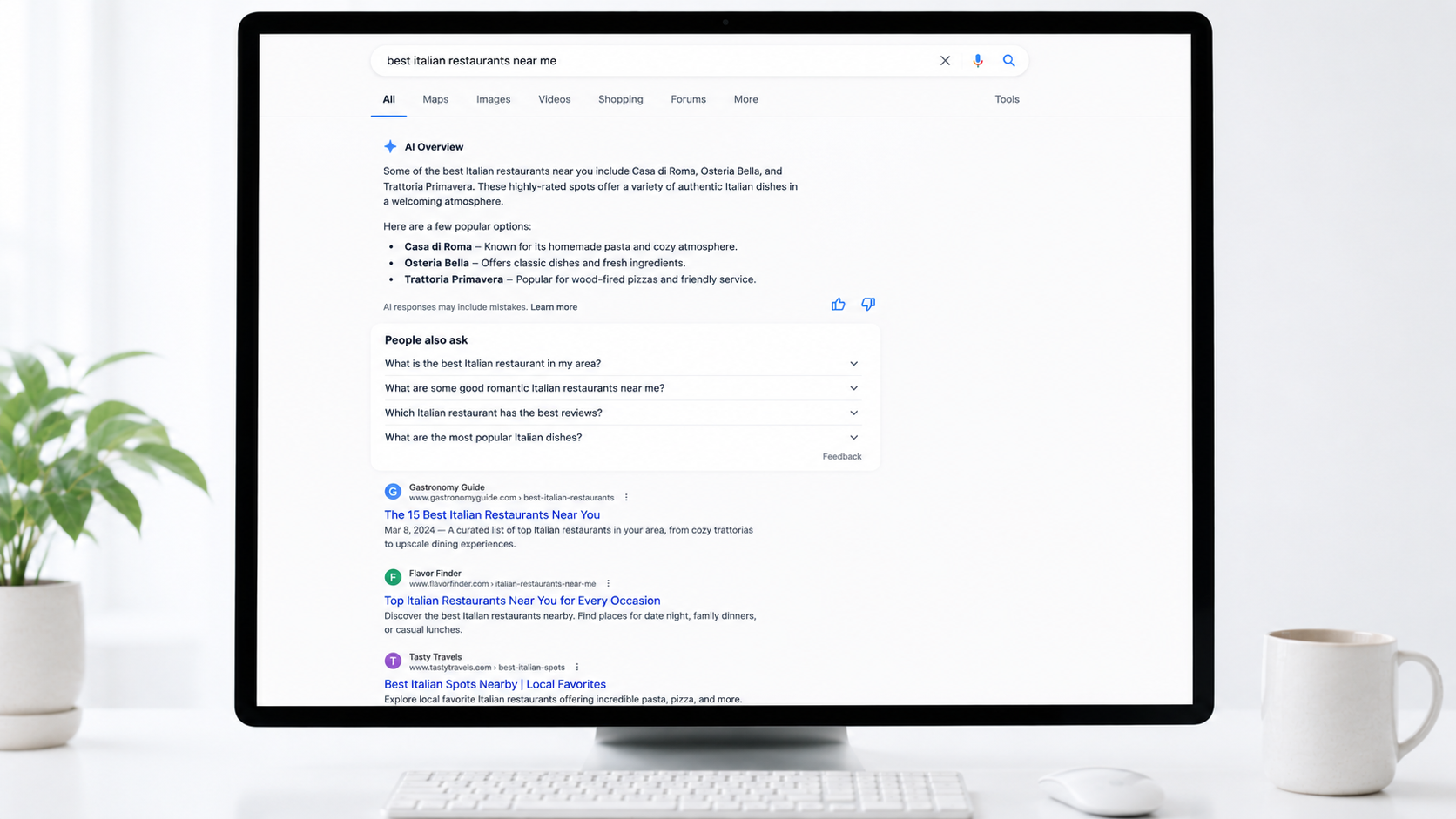
Real estate PPC spans multiple platforms, each with distinct mechanics and audience intent. Understanding structural differences between ad types determines which channels deliver qualified leads versus empty clicks.
Google Ads Search: Auction Model and Ad Extensions
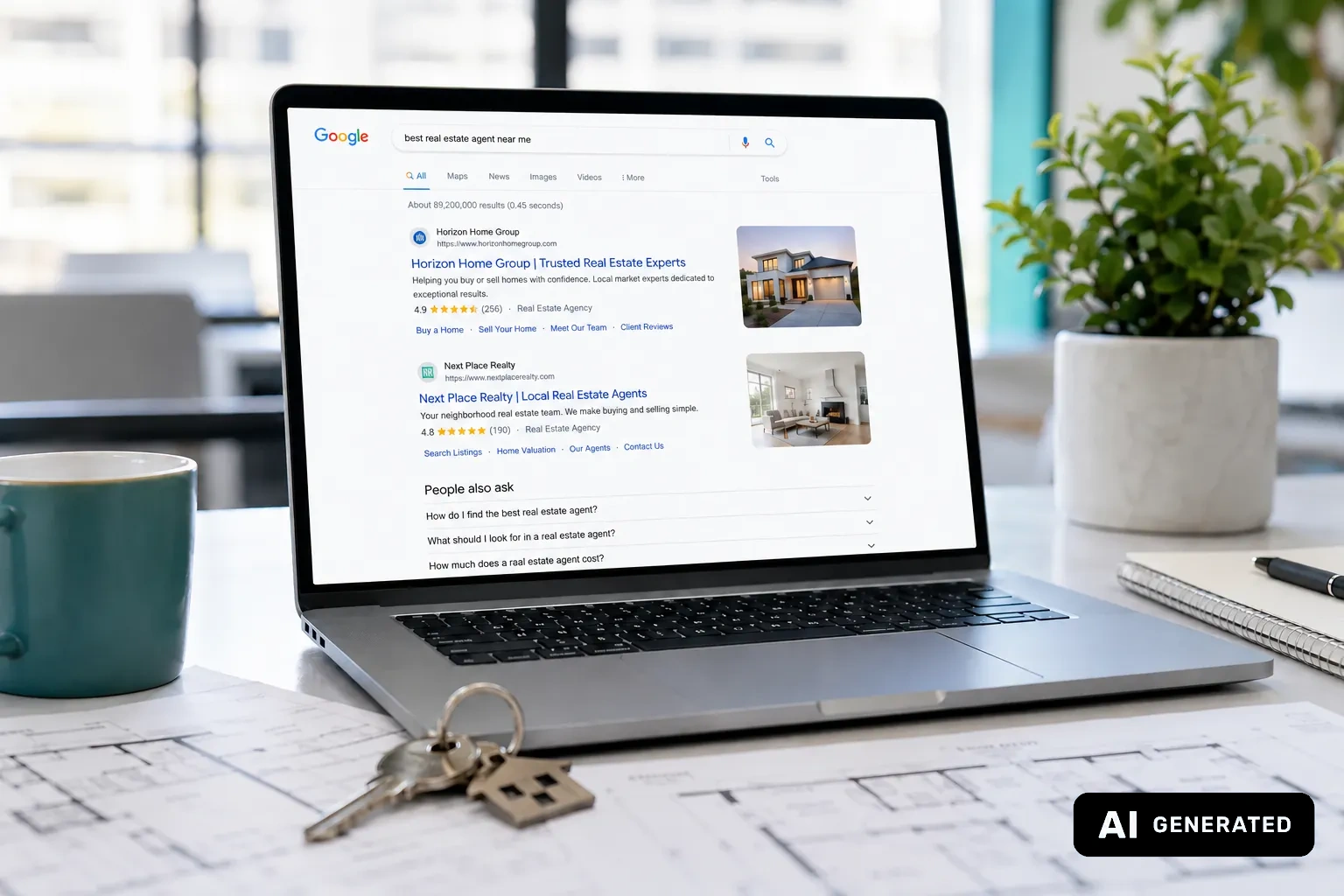
Google Ads remains the foundation for most real estate PPC campaigns. The platform operates on an auction model where AdRank—a function of quality score and maximum bid—determines placement. Agents typically pay $1–$2 per click, though costs vary by market competitiveness.
Keyword match types control traffic quality:
– Exact match limits impressions to the target phrase and close variants (misspellings, plurals, abbreviations)
– Phrase match triggers ads when search terms contain the target phrase in order
– Broad match maximizes exposure but attracts irrelevant searches
For real estate, exact and phrase match typically outperform broad match on cost-per-lead.
Ad extensions are critical for real estate search campaigns:
– Location extension: Adds street addresses and navigation
– Sitelink extension: Routes users to specific service pages
– Price extension: Displays listing ranges directly in search results, filtering low-intent traffic before the click
– Call extension: Enables direct contact from mobile devices
– Callout extension: Provides 25 additional characters to highlight differentiators (years of experience, market specialization)
Google Local Services Ads (LSAs): Pay-Per-Lead Model
LSAs appear above traditional PPC ads and Google My Business results—three ads on desktop, two on mobile. Unlike standard search ads, LSAs charge per lead, not per click, so budget adjustments directly impact lead volume. Budget for at least 20 leads per week when starting.
The “Google Screened” badge is critical. Agents who pass background checks, provide license information, and proof of insurance earn this trust signal; ads without it create friction. LSAs trigger on searches like “Realtor near [location]” or “Buyer’s Agent near me.”
Geo-targeting strategy matters: Targeting a standalone zip code limits visibility, while city or county formats capture both zip code and city searches. LSAs work best as an auxiliary tool alongside other channels, not as a standalone strategy.
Facebook and Instagram: Audience Targeting and Conversion Rates
Facebook remains the largest social media platform globally, with over three billion monthly active users. Real estate Facebook ads achieve a 10.68% conversion rate, outpacing the average across most industries. The platform targets users by interests and behaviors rather than active search intent, making it effective for awareness and remarketing but less reliable for immediate buyer leads.
Campaign setup requires:
1. Facebook Business Page and Ads Manager account
2. Selection of “Special Ad Category” for housing ads (enforces anti-discrimination policies)
3. Mandatory restrictions: 15-mile location radius and targeting “All” ages and genders
4. Campaign objective selection: Leads, Traffic, Awareness, or Engagement
Audience targeting strategies:
– Start with broader interests (“real estate,” “home buying,” “moving and relocation”)
– Narrow by property type (luxury goods for luxury real estate; homeownership interests for first-time buyers)
– Use custom audiences for retargeting uploaded contact lists
– Build lookalike audiences to replicate characteristics of existing customers
Facebook connects to Instagram, WhatsApp, and Messenger, extending campaign reach across Meta properties. Video ads increase conversion rates compared to static formats. Budget allocation follows either daily schedules for ongoing campaigns or lifetime limits for time-bound initiatives.
YouTube: Video Content and Local Targeting
YouTube ranks as the second most visited website globally. For real estate, it’s a platform for home tours, advice content, and personality-driven differentiation. Video tours save time and initiate client conversations, especially with Gen X, Millennials, and Gen Z buyers who consume home tour content regularly.
YouTube advertising offers local targeting for as little as $10 per day, with measurable performance that traditional media cannot match. Organic reach is difficult due to algorithm changes, so paid promotion is essential for gaining viewership. Experiment with formats—vlogs, testimonials, drone footage—to find what resonates with your audience.
LinkedIn and Reddit: Niche Audiences
LinkedIn Ads serve commercial real estate and B2B campaigns, targeting by company size, job title, and industry. Lead quality tends to be higher, but cost-per-click exceeds Facebook and Google. Fewer ad formats and customization options limit creative flexibility.
Reddit Ads provide access to highly engaged niche communities with lower competition, though purchase intent for residential real estate remains limited compared to search or social platforms.
Targeting Strategy: Geo-Targeting, Life Events, and Audience Segmentation
Geo-Targeting as the Foundation
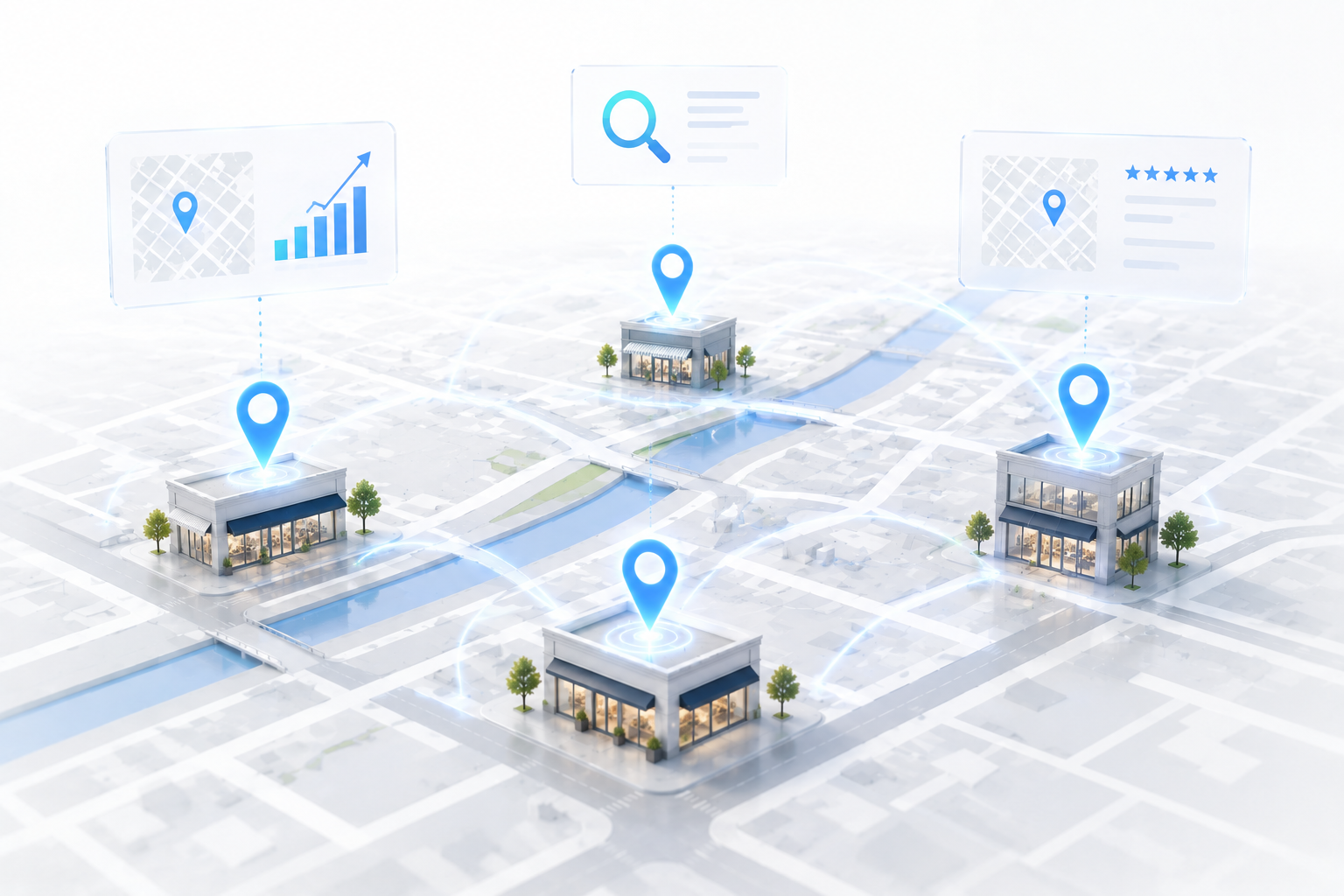
Real estate is a hyper-local business. Precision geo-targeting means showing ads only within exact neighborhoods, zip codes, and subdivisions where you operate—excluding everything else. Generic targeting wastes budget.
Implementation steps:
1. Map your service area with specific zip codes and neighborhood names
2. Set up separate campaigns for distinct neighborhoods
3. Use location exclusions aggressively to prevent spend outside your coverage area
4. Add location-specific keywords to each campaign
5. Monitor search terms weekly to identify which neighborhoods drive qualified leads and adjust bids accordingly
Layer location targeting with demographic data to refine reach further. For example, combine radius targeting around high-traffic community landmarks with income or age filters to match property types with likely buyers. Consider time-of-day adjustments based on when your target audience is most active online.
Tailoring Messages to Local Markets
Geo-targeting allows you to tailor messages and offers to specific locations and demographics, improving effectiveness and conversion rates. Craft ad copy and imagery that reflect local culture, landmarks, and market trends. A campaign for a downtown condo should speak differently than one for suburban family homes, even if both run in the same city.
Align your PPC campaigns with social media campaigns to amplify reach through cohesive, location-specific messaging. Use Facebook Ads Manager and Google Ads to execute radius targeting, and pair these platforms with demographic insights to reach users by age, income, marital status, or education level—factors that directly influence property preferences.
Targeting Life Events and Behavioral Signals
Beyond geography, target audiences based on life events such as recent marriages or job changes, which often trigger home searches. Segment audiences by online behavior: retarget website visitors who viewed specific property types or locations with customized ad copy.
Real estate decision cycles run three to six months, so set retargeting durations to 90–180 days and adjust frequency to stay visible without overwhelming prospects. Build lookalike audiences based on successful past clients to find new prospects with similar characteristics. Use behavioral targeting to identify users in the discovery phase—those searching for neighborhood information, mortgage calculators, or home valuation tools—and serve them relevant ads that match their stage in the buying or selling journey.
Fair Housing Compliance: Legal Requirements for All Ad Copy
Fair housing compliance is non-negotiable in real estate PPC. The Fair Housing Act prohibits any advertisement that indicates preference, limitation, or discrimination based on race, color, religion, sex, handicap, familial status, or national origin. This applies to every format—Google Ads, Facebook campaigns, landing pages, applications, and verbal communication with prospects. Many state and local jurisdictions extend protections further to include sexual orientation, marital status, source of income, and Housing Choice Voucher use.
What to Avoid in Ad Copy
Focus your copy on the property and its amenities, not the tenant. Phrases like “no children,” “Christian roommate,” “English speakers only,” or “Section 8 not accepted” (in jurisdictions prohibiting source of income discrimination) violate fair housing rules. Words expressing preference based on any protected class should not appear in your ads.
Targeting decisions matter as much as copy. Selectively using advertising media, geographic targeting, or audience exclusions based on protected characteristics can produce discriminatory results, even if the ad text itself is neutral. This includes Facebook’s demographic targeting and Google’s audience exclusions.
Compliance Best Practices
Include HUD’s Equal Housing Opportunity logo or slogan in all advertisements to create a presumption of compliance. If you use human models in creative, ensure they reflect community diversity—representing majority and minority groups, both sexes, persons with disabilities, and families with children. Models should not suggest exclusiveness based on any protected class.
Ignorance of these rules is not a legal defense. Update your ad templates, landing pages, and creative guidelines to align with current regulations. The goal is inclusion, not exclusion—compliant advertising broadens your addressable market rather than limiting it.
Budgeting for Impact: Realistic PPC Spends by Business Type
Real estate PPC in 2026 demands strategic allocation. The right budget depends on your operation’s scale, market density, and lead volume goals.
Budget Tiers
- Solo agents starting out: $500–$900/month supports a focused, single-campaign strategy yielding 5–12 leads monthly in mid-sized markets. Below $500, Google’s algorithm struggles to gather enough data for meaningful optimization.
- Growth-focused solo agents or small teams: $900–$2,000/month runs concurrent buyer and seller campaigns with retargeting, generating 15–30 leads per month in competitive mid-markets.
- Established teams or growing brokerages: $2,000–$5,000/month enables comprehensive multi-campaign strategies that produce 40–100 leads monthly.
- Large brokerages and multi-market operations: $5,000–$15,000 or more, with regional powerhouses spending $20,000–$50,000+ monthly to generate 300+ leads across multiple metros.
Cost Drivers
Costs fluctuate based on keyword intent, geography, and timing:
– Buyer keywords: $0.50–$3.00 per click
– Seller-focused terms: $5–$30 per click
– High-urgency seller keywords: $15–$65+ per click in competitive metros
– Branded service terms: $10–$25 per click
Seasonal demand cycles matter. Spring campaigns see CPC increases during April and May. Campaigns targeting premium neighborhoods cost more than standard markets. Winter typically offers the lowest costs.
Operational Costs Beyond Ad Spend
Factor in:
– Management fees: $500–$1,500 monthly or 10–20% of ad spend
– Landing page design: $100–$1,000
– CRM tools: $50–$300/month
These operational costs ensure campaigns run efficiently and leads convert into closed deals.
Platform Strategy: Google PPC vs. Real Estate Portals
Understanding the Difference
The real estate portal landscape includes Zillow and Realtor.com, which operate fundamentally differently from Google Ads.
Zillow operates as a consumer-first technology company and dominates consumer traffic, but delivers primarily top-of-funnel leads—aspirational browsers who require aggressive follow-up. Realtor.com maintains an agent-centric approach through its NAR affiliation and typically delivers higher-intent leads arriving further along in the buying process.
Both platforms use dynamic pricing based on ZIP code exclusivity and competition. Costs can exceed $1,000 per lead with conversion rates under 2%.
The Shared Lead Problem
Both Zillow and Realtor.com distribute non-exclusive leads, forcing agents to compete directly with others who received the same contact. This creates inherent inefficiency—you’re paying for access, not exclusivity. The platforms themselves invest heavily in Google and Facebook ads, capturing traffic and reselling it to multiple agents.
When Google PPC Makes Sense
Google PPC campaigns target prospects with active search intent—mid-funnel leads already looking for homes. This approach suits established agents needing more transactions rather than brand awareness. Unlike portal leads, Google Ads deliver prospects directly to your properties and brand, creating exclusive lead generation channels you control.
Facebook ads serve a different purpose: overall branding and awareness, particularly valuable for newer agents building market presence. The strategic choice depends on your business stage and lead quality requirements.
Building Your Own Ecosystem
Relying on shared portal leads creates vulnerability to platform changes, legal issues, and pricing fluctuations. A smarter long-term strategy involves investing in your own digital ecosystem—targeted Google Ads combined with SEO—to generate exclusive, high-intent leads. This approach builds sustainable competitive advantage rather than renting temporary access to shared prospects.
Optimization and Long-Term Strategy
Build for Continuous Improvement
Real estate PPC requires continuous optimization and adaptation to market trends. Success depends on a systematic approach to managing rising costs and competition. This means conversion-optimized landing pages, continuous monitoring, testing, and a disciplined process for improvement.
Before running ads, establish a reliable system for following up on leads. Email drip campaigns work well to push for appointments, and if you’re working with other agents, define clear protocols for lead contact and response time.
Leverage AI and First-Party Data
AI and machine learning will transform how real estate PPC campaigns are automated and optimized. AI-powered tools can predict successful ads, identify optimal bidding strategies, and improve targeting and personalization over time. They also enhance keyword research and uncover new opportunities that manual analysis misses.
With third-party cookies phasing out, gathering and using first-party data from your CRM becomes essential. AI-powered automation for bidding and optimization will no longer be optional—it will be the baseline for staying competitive.
Combine Channels and Creative Formats
The most effective long-term approach combines PPC for instant leads with SEO for organic traffic, authority, and trust. Creative ad strategies should be tailored by platform: visual content for Facebook and Instagram, keyword-rich copy for Google Ads, professional content for LinkedIn.
Video marketing will be crucial for enhancing PPC visibility and engagement—high-quality property videos, drone footage, 3D tours, and testimonials increase click-through rates. Optimize video content with targeted keywords and clear calls-to-action to drive more targeted traffic.
Key Takeaways for Real Estate PPC
PPC for real estate remains valuable because it delivers high-intent leads that can be targeted by demographics and location. The key is treating it as a system, not a tactic—one that captures leads, follows up consistently, and maintains a steady flow. Success requires:
- Precise geo-targeting to eliminate wasted spend outside your service area
- Message alignment between ad copy and landing pages to improve conversion rates
- Systematic follow-up within 60 seconds of lead arrival
- Regular optimization based on performance data and market shifts
- Fair housing compliance in all ad copy and targeting decisions
- Multi-channel integration combining search, social, and video for maximum reach
Scopic Studios delivers exceptional and engaging content rooted in our expertise across marketing and creative services. Our team of talented writers and digital experts excel in transforming intricate concepts into captivating narratives tailored for diverse industries. We’re passionate about crafting content that not only resonates but also drives value across all digital platforms.